Juno Beach Office:


Preserving Your Natural Smile and Restoring Jaw Health
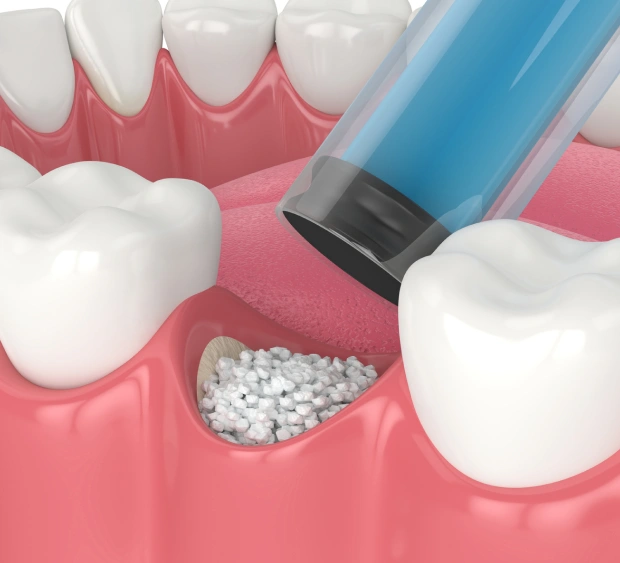
Bone grafting, often referred to as regenerative surgery, is a sophisticated procedure used to restore the bone and soft supporting tissues lost to periodontal disease. If you are experiencing bone loss due to periodontitis, Dr. Bally may recommend a bone graft as a vital step to stabilize your teeth and avoid the need for extractions.
Guided-Bone Regeneration
Guided bone regeneration (GBR) is a surgical procedure that promotes the growth of new bone in areas with bone loss, often following tooth extraction or injury. A barrier membrane is placed to direct the growth of new bone cells, helping restore the bone structure for successful dental implant placement and overall oral function.
Lateral Ridge Augmentation
Lateral ridge augmentation is a surgical procedure used to restore bone width in areas of the jaw where it has been lost, typically due to tooth extraction or resorption. Bone grafting material is placed along the sides of the jaw, helping to rebuild the bone structure and provide a stable foundation for dental implants.
Post-Operative Instructions for a Bone Graft
Post-operative instructions for a bone graft focus on ensuring proper healing and preventing complications. Patients are advised to avoid touching the surgical area, follow a soft diet, take prescribed medications as directed, and rest to reduce swelling. Maintaining good oral hygiene with gentle cleaning is essential, and follow-up appointments are necessary to monitor healing progress.
Post-Op Instructions for Guided-Bone Regeneration
Post-op instructions for guided bone regeneration (GBR) focus on promoting healing and preventing complications. Patients should avoid touching the surgical site, refrain from strenuous activities, and follow a soft diet for the first few days. Swelling and discomfort can be managed with prescribed medications. Gentle oral hygiene and follow-up visits are essential to ensure proper healing and implant success.
The primary goal of this treatment is to stimulate your body’s natural ability to rebuild the structures that anchor your teeth to your jaw. The process involves:
- Access & Cleaning: The gum tissue is gently separated from the teeth to allow access to the underlying bone and roots. We then perform a meticulous cleaning to remove all bacteria and infection.
- Placement of Graft Material: The areas of bone loss are filled with specialized graft material—often using your own natural bone or high-quality donor tissue—to act as a scaffold for new growth.
- Healing & Regeneration: Once the material is in place, the gums are repositioned and secured. Over the following months, the graft encourages your body to regenerate new, healthy bone and soft tissue, significantly strengthening your smile.
Ridge Augmentation: Restoring Your Natural Contours
When a tooth is lost, the jawbone naturally begins to recede, often leaving an unnatural "indentation" in the gum line. Ridge augmentation is a specialized procedure used to fill these sunken areas and restore the natural shape of your jaw and gums.
Why is it important?
- Aesthetic Balance: It prevents replacement teeth from looking unnaturally long, ensuring a seamless and beautiful smile.
- Easier Maintenance: By leveling the gum line, we eliminate "food traps," making it much easier to keep the area clean.
- Implant Support: It provides the essential bone volume needed to anchor a stable, long-lasting dental implant.
By rebuilding both bone and soft tissue, we create a smooth, healthy foundation that perfectly complements your dental restorations.