Juno Beach Office:

Gum Care and Disease Prevention
Gum disease, or periodontal disease, is an infection of the tissues surrounding your teeth and is a leading cause of tooth loss in adults. Often painless, many people are unaware they have it. During your regular checkups, we screen for signs of gum disease by measuring the spaces between your teeth and gums to catch any issues early.
Gingivitis
Gingivitis is an early stage of gum disease caused by plaque buildup along the gumline. Common signs include redness, swelling, and bleeding during brushing or flossing. With proper oral hygiene and regular dental care, gingivitis is reversible and can be managed before it progresses to more serious gum conditions.
Periodontitis
Periodontitis is an advanced form of gum disease that affects the tissues and bone supporting the teeth. It can lead to gum recession, deep pockets, and loose teeth if untreated. Early diagnosis and ongoing care help control infection, protect bone structure, and maintain long-term oral health.
Prophy vs Scaling and Root Planing
Prophy (professional cleaning) and scaling and root planing treat different levels of gum health. Prophy removes plaque and tartar above the gumline to maintain healthy gums. Scaling and root planing is a deeper procedure that cleans below the gumline, targeting infection and helping manage gum disease progression.
Plaque and Calculus
Plaque is a soft, sticky film of bacteria that forms on teeth daily, while calculus (tartar) is hardened plaque that cannot be removed by brushing alone. If not managed, both can irritate gums and lead to decay or gum disease. Regular hygiene and professional cleanings help keep buildup under control.
Consequences of Bone Loss
Bone loss in the jaw weakens the support structure around teeth, often caused by untreated gum disease or missing teeth. It can lead to loose teeth, bite changes, and facial changes over time. Early detection and treatment help slow progression and preserve both function and overall oral health.
Gingival Recession
Gingival recession occurs when the gum tissue pulls away from the teeth, exposing the root surface. This can lead to sensitivity, increased risk of decay, and changes in appearance. Early evaluation helps identify causes and guide care to protect the gums and maintain long-term oral health.
Peri-Implant Mucositis
Peri-implant mucositis is inflammation of the gum tissue around a dental implant, often caused by plaque buildup. Symptoms may include redness, swelling, and bleeding. When identified early, it can be managed with proper cleaning and professional care to prevent progression to more serious implant complications.
Peri-Implantitis
Peri-implantitis is a more advanced condition affecting the tissues and bone around a dental implant. It develops from untreated inflammation and can lead to bone loss and implant instability. Early diagnosis and targeted care are essential to control infection, protect surrounding structures, and maintain long-term implant health.
What Leads to Gum Disease?
Gum disease develops when plaque—a sticky layer of bacteria—builds up on the teeth. Without proper brushing, flossing, and regular dental visits, plaque produces toxins that can harm your gums.
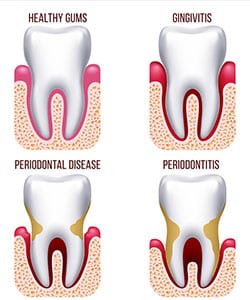
Periodontal disease occurs beneath the gum line, forming small pockets that separate the gums from the teeth. It progresses in two stages: gingivitis and periodontitis.
- Gingivitis — The earliest stage of gum disease, where gums become red, swollen, and bleed easily. At this stage, the condition is reversible with consistent daily brushing, flossing, and professional care.
- Periodontitis — If gingivitis is not treated, it can progress to periodontitis. At this stage, the gums and supporting bone are permanently damaged, which can lead to loose teeth, tooth loss, or the need for dental extraction.
Risk Factors That Contribute to Gum Disease
- Smoking or using chewing tobacco
- Diabetes
- Medications such as steroids, anti-epilepsy drugs, cancer treatments, calcium channel blockers, and oral contraceptives
- Ill-fitting dental bridges
- Crooked or misaligned teeth
- Worn or old dental fillings
- Pregnancy
Signs and Symptoms That May Indicate Gum Disease Include:
- Gums that bleed easily
- Red, swollen, or tender gums
- Gums that are receding or pulling away from the teeth
- Persistent bad breath or a bad taste in the mouth
- Pus forming between the teeth and gums
- Loose or shifting permanent teeth
- Changes in the way your teeth come together when biting
- Changes in the fit of partial dentures
Gum Disease Treatment and Care
Gum disease treatment depends on the severity of the condition. Common approaches include:
- Non-surgical treatments, including at-home periodontal trays and scaling and root planing (deep cleaning)
- Periodontal surgery, including traditional or laser gum surgery
- Dental implants to replace teeth lost due to advanced gum disease
How to Prevent Gum Disease
Routine dental checkups and periodontal exams are essential for protecting both your oral health and your overall well-being. Gum disease doesn’t have to lead to tooth loss—maintaining good oral hygiene at home can greatly reduce your risk.
Be sure to brush your teeth regularly, floss daily, eat a balanced diet, and visit your dentist consistently to keep your smile healthy and strong.