Wellington Office:


Understanding Wisdom Teeth and Their Impact
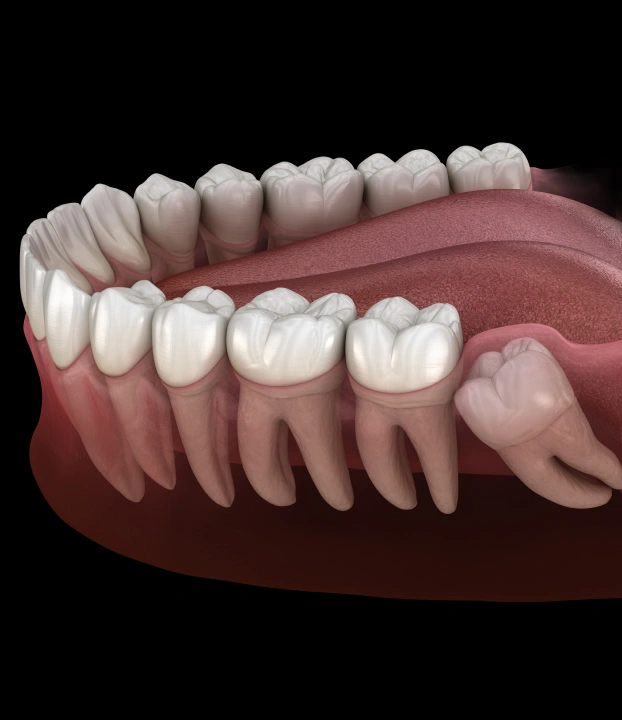
Wisdom teeth are the third molars located at the back of your mouth. These teeth typically emerge during the late teens or early twenties, but sometimes they become impacted. Impacted wisdom teeth don’t fully erupt due to insufficient space or an improper angle. The most common type of impacted wisdom tooth is “mesial,” where the tooth is angled forward toward the front of the mouth.
If a wisdom tooth is impacted, it may need to be removed. Impacted teeth that are partially or fully erupted are difficult to clean, making them more susceptible to tooth decay, gum disease, and infections. It’s important to address these issues early to avoid further complications.
Impacted Third Molar
An impacted third molar, commonly known as a wisdom tooth, occurs when there is not enough space in the jaw for the tooth to emerge or align properly. This can lead to pain, infection, or damage to neighboring teeth. Extraction is often recommended to prevent complications and promote oral health.
Surgical Extraction (3rd Molar)
Surgical extraction of a third molar involves removing an impacted or unerupted wisdom tooth through an incision in the gum. The procedure may require bone removal and division of the tooth for easier extraction. Post-operative care, including rest, ice packs, and prescribed pain medication, is essential for proper healing.
Why Early Extraction is Recommended
Wisdom teeth are typically removed in the late teens or early twenties. At this stage, the roots have not fully formed, and the bone surrounding the tooth is less dense. This makes extraction easier and the recovery process quicker. Your dentist will usually take a panoramic X-ray to determine if your wisdom teeth need to be removed. If removal is recommended, it's best to do it sooner to prevent pain or complications down the line.
The Extraction Process and Recovery
During the procedure, the dentist will numb the area with a local anesthetic, and sedation options are available if you feel nervous. If the tooth is impacted, the dentist may need to remove a portion of the bone surrounding it. To minimize damage, the tooth is often sectioned into smaller pieces for easier extraction.
After the procedure, healing time will depend on the complexity of the extraction. We’ll provide detailed aftercare instructions to ensure a smooth and comfortable recovery. Following these instructions will help ensure a quick healing process and reduce the risk of complications.