Wellington Office:


Gum Grafting for Receding Gums
Gum recession can occur due to various factors, including aggressive brushing or periodontal disease. While you may not have control over the cause, our team will work with you to identify contributing factors before beginning treatment.
Gum grafting is an effective solution that covers exposed tooth roots, providing protection from decay, reducing tooth sensitivity, and enhancing the overall appearance of your smile. Whether you undergo gum grafting for functional or aesthetic reasons, you'll enjoy the benefits of a healthier smile and improved periodontal health, allowing you to smile, eat, and speak with comfort and confidence.
Connective Tissue Graft
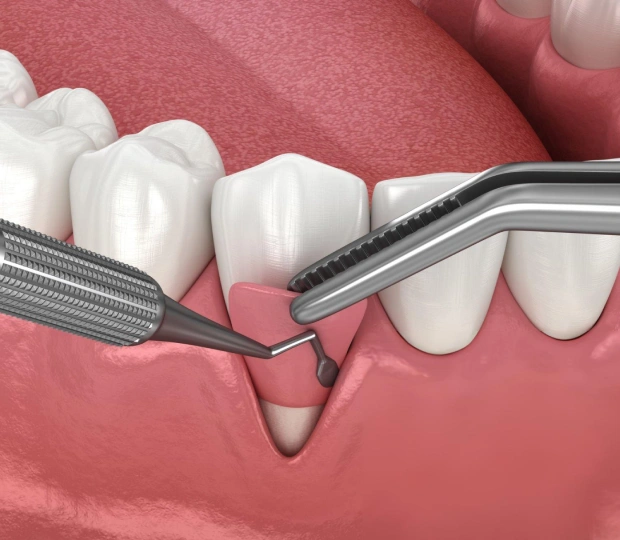
A connective tissue graft is a surgical procedure used to treat gum recession by taking tissue from the roof of the mouth and grafting it onto the affected area. This technique helps cover exposed tooth roots, restore gum volume, and improve both aesthetics and gum health, while preventing further recession.
Soft-Tissue Allograft Surgery
Soft-tissue allograft surgery involves using donated tissue from a human donor to replace or augment areas of gum recession. This procedure helps restore gum tissue, improve the appearance of the smile, and protect tooth roots from further exposure, while promoting overall gum health and stability.
Gum Recession Treatment and Gum Tissue Grafting
Gum recession, often caused by untreated gum disease, leads to the gums pulling away from the teeth, forming pockets that allow bacteria to grow. This can cause damage to the bone supporting your teeth, and over time, your teeth may appear longer, or become loose.
Do You Have Gum Recession?
Gum recession develops gradually and can often go unnoticed until the effects become more apparent. Signs to look for include tooth sensitivity to temperature or certain foods, longer-looking teeth, increasing spaces between teeth, or the visible roots of your teeth. If you've been diagnosed with gum disease, it's important to recognize these signs and address them early.
Gum Tissue Grafting Procedure
When you visit our office for gum grafting, we ensure your comfort by using local anesthesia and offering relaxation medication if needed. The procedure involves one of the following grafting methods, depending on your specific needs:
- Connective Tissue Grafts: The most common method, where tissue is taken from under a flap on the roof of your mouth and grafted onto the exposed root area.
- Free Gingival Grafts: Used for people with thin gums, this method involves removing tissue directly from the roof of your mouth and attaching it to the gum area.
- Pedicle Grafts: When there is enough healthy gum tissue around the tooth, a piece of tissue is partially cut and moved to cover the exposed root.
Dr. Bally will work with you to choose the best approach for your specific condition, ensuring a healthy, beautiful smile and improved oral function.