Wellington Office:


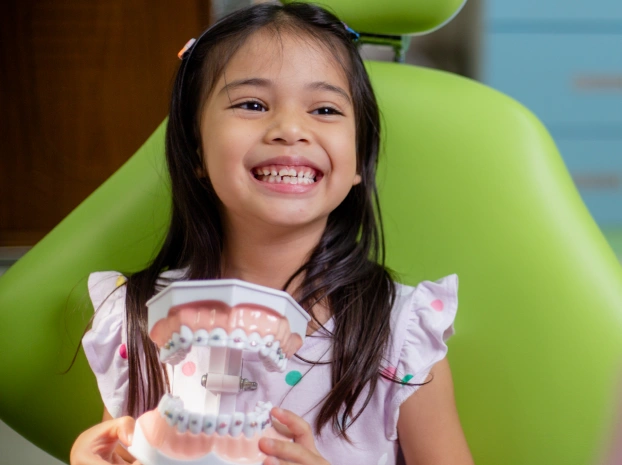
Early Orthodontic Treatment for Children
Early orthodontic treatment, often referred to as Phase One, is designed to address potential issues with jaw growth and bite alignment before all of your child’s permanent teeth have erupted. The American Association of Orthodontists recommends that children visit an orthodontist by the age of seven to assess whether early intervention is necessary.
Why Start Early?
Phase One treatment typically begins around ages eight or nine, while Phase Two occurs around age 11 or older. The goal of early treatment is to guide the growth of your child’s jaw, correct bite problems like underbites, and make space for permanent teeth to emerge correctly. Early intervention can help prevent more serious orthodontic issues in the future, reducing the need for extractions and more invasive treatments.
Signs Your Child May Need Early Orthodontic Treatment
- Early or late loss of baby teeth (teeth should start falling out around age five)
- Difficulty chewing or biting food
- Mouth breathing
- Thumb-sucking past age five
- Speech impediments
- Protruding or misaligned teeth
- Jaw shifting when opening/closing mouth (crossbite)
- Crowded teeth around ages seven or eight
Causes of Orthodontic Problems
Orthodontic issues such as crooked or crowded teeth, jaw growth problems, and poor bites may be inherited or caused by habits like thumb sucking, early loss of baby teeth, or mouth injuries.
Benefits of Early Treatment
Addressing orthodontic problems early can help guide your child’s growth and avoid the need for more invasive procedures later in life. Once the jaw bones stop growing after the teen years, orthodontic treatments for adults may take longer and could require tooth extractions or surgery. Early intervention can save your child from these more complicated treatments, ensuring a healthier smile in the future.