Boynton Beach Office:


Rejuvenating Your Smile and Occlusion
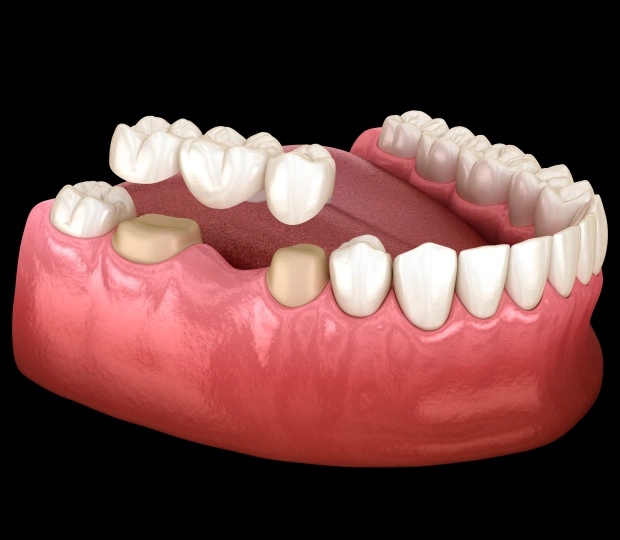
A dental bridge offers a perfect choice for replacing missing teeth at Modern Dental Smiles, enhancing your smile's look and reducing bite strain. It fills the gap from one or more lost teeth, boosting chewing, speaking, and bite health at our Boynton Beach, FL.
Bridge Versus an Implant
A bridge and a dental implant both replace missing teeth but differ in approach. A bridge relies on neighboring teeth for support, while an implant is placed directly into the jawbone. The choice depends on bone health, surrounding teeth, and long-term goals for function, stability, and preservation of natural structure.
Anterior Bridge
An anterior bridge replaces one or more missing front teeth by anchoring to adjacent teeth. It restores appearance, speech, and bite function while maintaining facial support. Designed to blend with natural teeth, it offers a stable, fixed solution for improving both aesthetics and everyday comfort.
Posterior Bridge
A posterior bridge replaces one or more missing back teeth by anchoring to neighboring teeth. It restores chewing strength, maintains bite balance, and prevents surrounding teeth from shifting. Designed for durability, it helps support proper function and long-term stability in the back of the mouth.
Cantilever Bridge
A cantilever bridge replaces a missing tooth using support from a single adjacent tooth. It is typically used when only one neighboring tooth is available for anchoring. This design restores appearance and function, though case selection is important to ensure proper support and long-term stability.
Post-Operative Instructions for a Temporary Bridge
Post-operative instructions for a temporary bridge focus on protecting the restoration and maintaining comfort. Patients are advised to avoid sticky or hard foods, chew on the opposite side, and clean gently around the area. Following these steps helps keep the temporary bridge secure until the final restoration is placed.
Post-Operative Instructions for a Bridge
Post-operative instructions for a bridge focus on protecting the new restoration and allowing the surrounding tissues to adjust. Patients are advised to maintain proper brushing and flossing, avoid very hard or sticky foods initially, and monitor bite comfort. Following these guidelines helps ensure stability, comfort, and long-term success.
Caring for a Bridge (Traditional)
Caring for a traditional bridge involves maintaining clean, healthy gums and supporting teeth. Patients are guided to brush twice daily, use floss threaders or interdental tools to clean under the bridge, and attend regular checkups. Consistent care helps prevent decay, gum issues, and supports long-term durability.
How Dental Bridges Function
A dental bridge features prosthetic teeth that span the space from lost teeth. These replacements anchor firmly to adjacent teeth for stability, reinstating both functionality and visual appeal. Crafted from gold, alloys, porcelain, or mixed materials, bridges tailor to your specific requirements and tastes.
The Value of a Solid Base
The durability of your dental bridge relies on the robustness and condition of the adjacent teeth, gums, and bone it anchors to. Practicing excellent oral hygiene and preserving the health of your current teeth and gums proves essential for the bridge's enduring performance.