Boynton Beach Office:


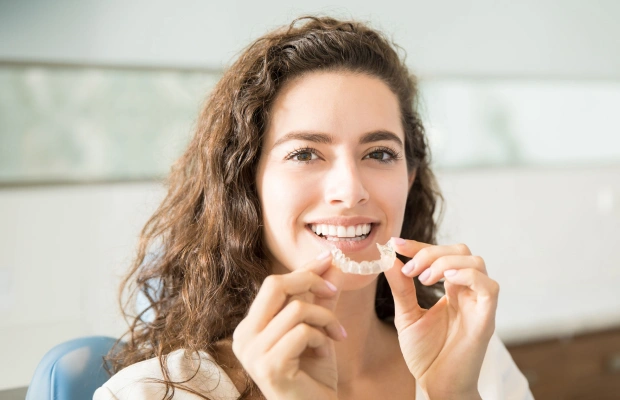
Orthodontic Exam for a Healthier Smile
An orthodontic exam provides a thorough evaluation of teeth alignment, jaw positioning, and bite function. During the assessment, we check for misalignment, crowding, bite discrepancies, and related issues to pinpoint concerns accurately. Early detection enables proactive intervention and a customized treatment strategy for a healthier, more confident smile.
Crowded Teeth
Crowded teeth occur when there is not enough space in the jaw for teeth to align properly, causing overlap or twisting. This can make cleaning difficult and increase the risk of decay and gum issues. Early evaluation helps guide treatment to improve alignment, function, and overall oral health.
Malocclusion (Class I)
Class I malocclusion refers to a normal bite relationship between the upper and lower teeth, but with issues like crowding, spacing, or minor alignment problems. Even though the bite is generally correct, treatment may be needed to improve function, oral hygiene, and overall appearance.
Malocclusion (Class II)
Class II malocclusion, also known as an overbite, occurs when the upper teeth protrude beyond the lower teeth. This misalignment can affect chewing, speaking, and overall oral health. Treatment options like braces or aligners can help correct the bite, improving function and appearance over time.
Malocclusion (Class III)
Class III malocclusion, or an underbite, occurs when the lower teeth extend beyond the upper teeth. This misalignment can lead to difficulty with chewing, speaking, and jaw discomfort. Treatment options, such as braces or surgery, can help correct the bite, improving both function and appearance.
Anterior Open Bite
An anterior open bite occurs when the upper and lower front teeth don't touch when the mouth is closed. This can affect biting, chewing, and speaking. Treatment options, such as braces or aligners, can help realign the teeth, improving function and overall oral health.
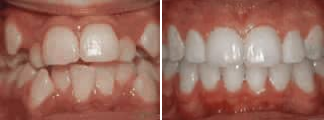
As a young child, this girl had a thumb-sucking habit. She began treatment at age 13, which included braces and a special appliance called a crib to retrain her tongue. After 28 months, she can now bite into a sandwich with ease.
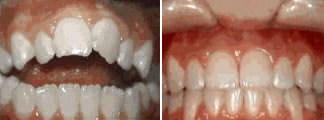
This 25-year-old patient needed braces and jaw surgery to correct a severe overbite. Treatment took two years. If he had received care before his teenage years, surgery might have been avoidable.
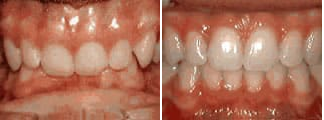
This woman was born without her lateral incisors. She wore braces for 20 months to properly align her teeth, after which the missing teeth were replaced with bonded “Maryland” bridges.
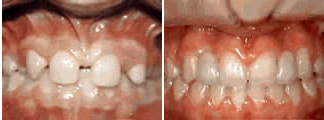
This woman’s underbite was causing jaw discomfort and excessive wear on her teeth. After approximately 30 months of treatment, which began at age 32, she now finds smiling and chewing much easier.
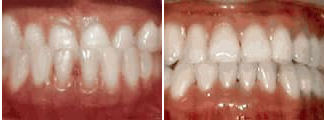
The patient was concerned about the gaps between his teeth. Braces closed the spaces and achieved an ideal bite in 24 months. Special bonded retainers help maintain the results.
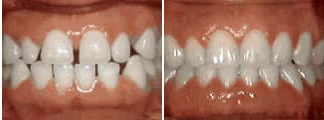
At age ten, this girl had a pronounced overjet, with her upper teeth protruding beyond her lower teeth. She underwent two phases of treatment: the first guided her jaw growth for better harmony, and the second aligned her teeth and bite. By age 13, she was proudly showing off her new smile.
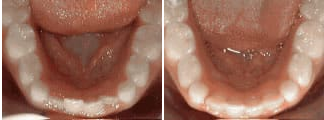
Sometimes, braces are not needed to get noticeable improvements in tooth alignment. This patient was first seen at age seven for crowding of the lower permanent teeth. A procedure was performed to reduce the width of the adjacent baby teeth and the permanent incisors aligned on their own in nine months.
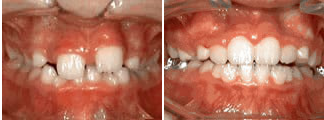
This boy’s parents were concerned about both aesthetics and the health of the erupting permanent teeth when they brought him to the orthodontist at age eight. The lower front teeth were crowded and touching the palate, and the upper front teeth were extremely displaced from their normal positions. After 12 months of Phase-One treatment with an expander and partial braces, the patient’s appearance and dental function were vastly improved.